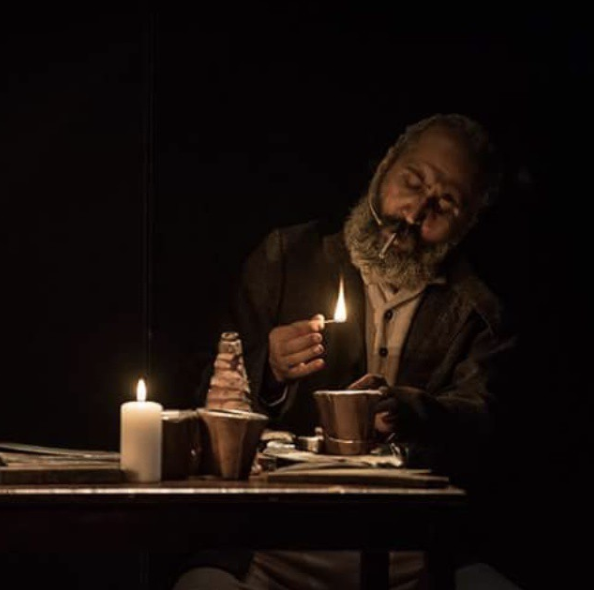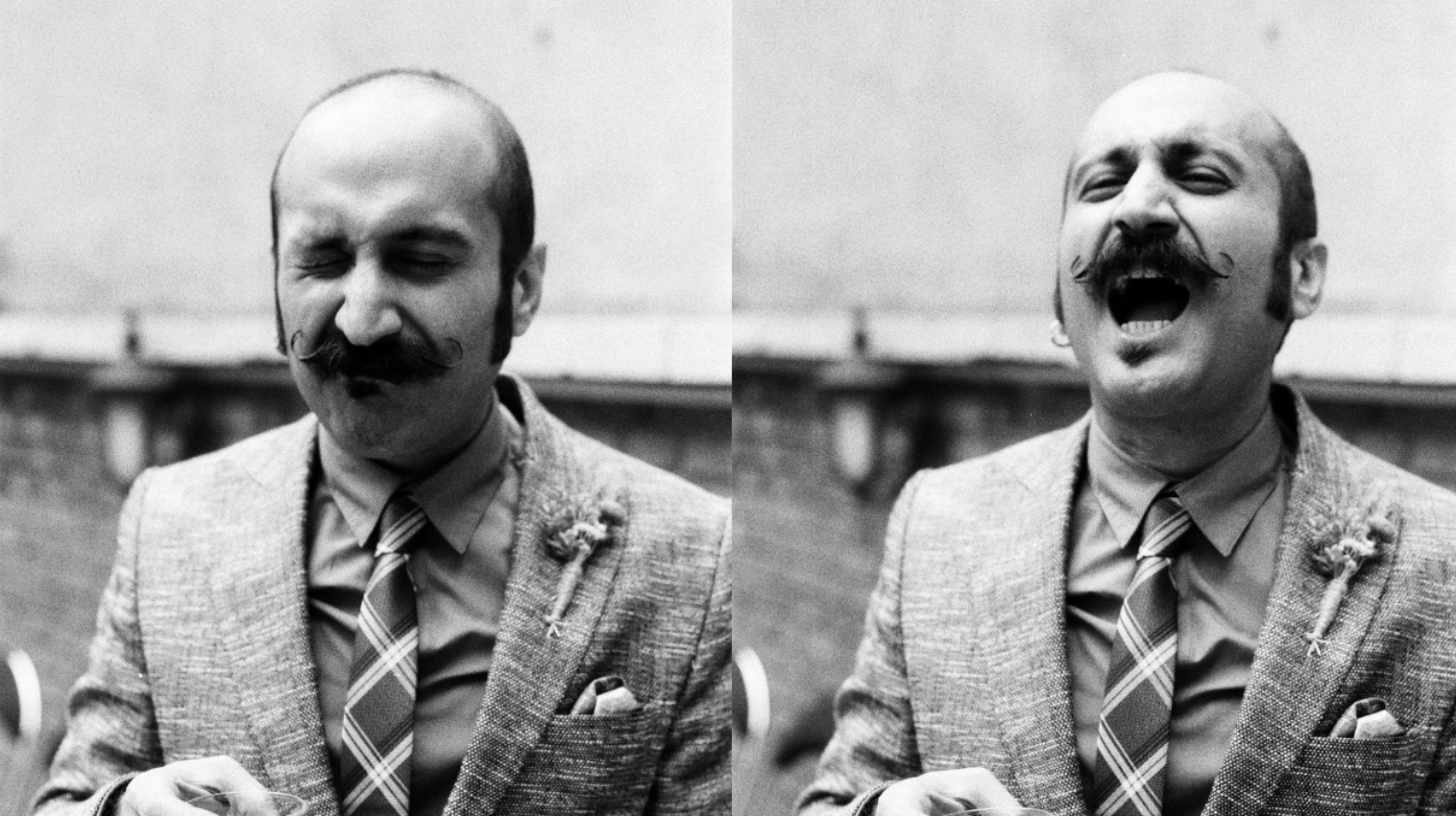
Pouya Pour-Amin is a multidisciplinary artist, born in Tehran and currently an artist-in-residence with Safemuse. (Photo: published with the artist's permission)
Pouya Pour-Amin is a multidisciplinary artist with over twenty years of experience in music, composition, sound design and performance. Born in Tehran in 1983 into a family that worked in the arts, Pouya grew up in a creative environment. His mother was a puppeteer and actress, his father was a cinematographer, and his grandfather was an instrumentalist who played the tar – a traditional Iranian string instrument. Pouya began learning music when he was five years old and by his late teens he was making his own music.
As a university student, he began to study computer science, music and theatre, but dropped out three times because he felt that the studies and academic system did not have much to offer him. He continued to study through self-learning and private teachers. Pouya played the guitar, but his love for the low frequencies led him to take up the double bass, which he coincidentally discovered while studying at the Tehran Conservatory. Later Pouya joined the contemporary chamber orchestra, The Camerada Orchestra, where he spent a decade of tremedous musical growth under the guidance the conductor Kayvan Mirhadi, who had also been his musical teacher. His very first works as a composer were performed by Mirhadi’s orchestra.
Looking back, Pouya’s grandfather, Akbar Jeddikar, and the conductor of the Camerada Orchestra, Kayvan Mirhadi, were his biggest inspirations growing up:
— They were both very special people to me, opened my eyes to the worlds of music and literature and became my window to the world beyond the strict religious Iranian society, he says.
— My grandfather first of all influenced me as a human being. He was not religious and did not believe in God, something which was very rare for his generation and in Iranian society in general. We had a very close relationship. He was open-minded and introduced me to politics and critical thought through his vast collection of literature. Kayvan Mirhadi, the conductor, was also my classical teacher, but did not have the dogma-point-of-view that most educators had. Instead he was wise and had an open view to the arts and to different kinds of music. He introduced me to Western contemporary music, which opened my eyes and made me realise that there was so much to explore and learn, Pouya recalls.
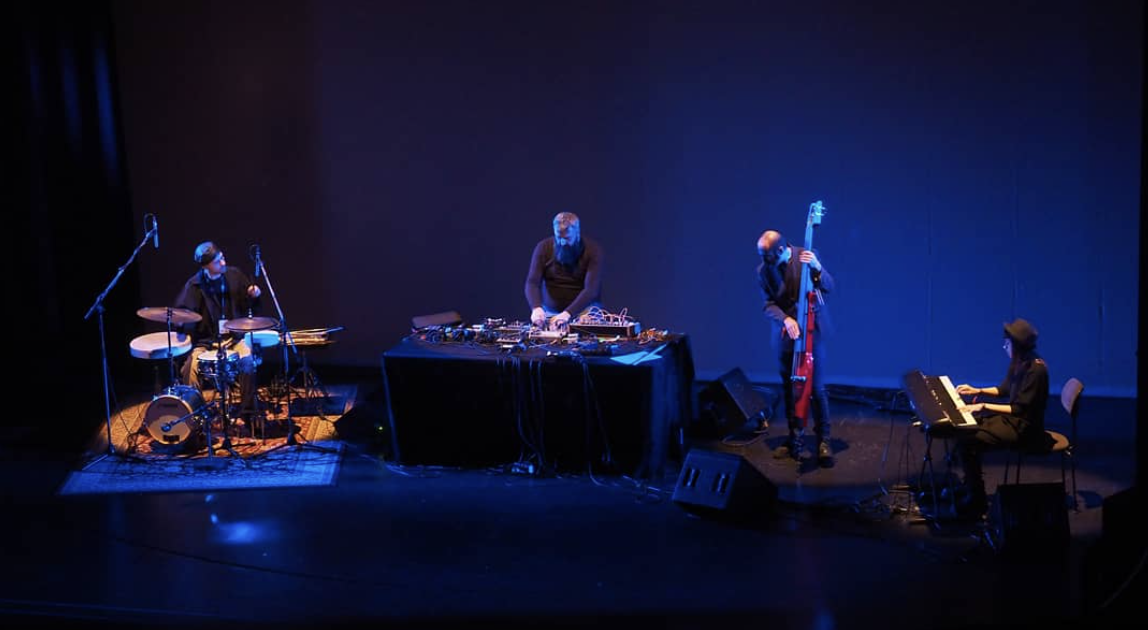
Pouya played the double bass for many years before beggining to explore new sounds and artistic disciplines. (Photo: published with the artist's permission)
“While living in Iran, I worked a lot in fear. I had to find secret ways, like put my phone in the microwave to avoid being tapped, and I lived under the constant fear of getting in trouble with the authorities.”
— Pouya Pour-Amin
The struggle for artistic freedom
Artists in Iran who refuse to stay silent in the face of the country’s authorities and current sociopolitical situation pay a high price for their expression. Over the last years, the Iranian government has taken on increasingly harsh measures to suppress artistic freedom of expression and exert control over artists through threats, censorship and persecution.
Pouya laments the ongoing situation in his homecountry whereby artists, writers and journalists are frequently subjected to superveillance, interrogations, detention, imprisonment, torture, and even the death penalty to punish those who dare to question or criticise the system. Pouya has many friends and colleagues who have received death threats, been forced to flee the country and live in exile. He, too, has felt the heavy burden of being an artist without freedom of expression.
— While living in Iran, I worked a lot in fear. I had to find secret ways, like put my phone in the microwave, to avoid being tapped and I lived under the constant fear of getting in trouble with the authorities. Sometimes I chose not to put my name on my work to avoid getting in trouble. The thought that someone could call the door bell to detain me, plant evidence and present untrue allegations was constantly in the back of my mind, he says.